
Surgical techniques

Modern surgical methods

Only as much surgery as necessary. As tissue-conscious as possible.

No single method is appropriate for every situation. CBCT findings, available bone, soft tissue, the prosthetic goal and the individual risk profile determine which surgical approach is selected.

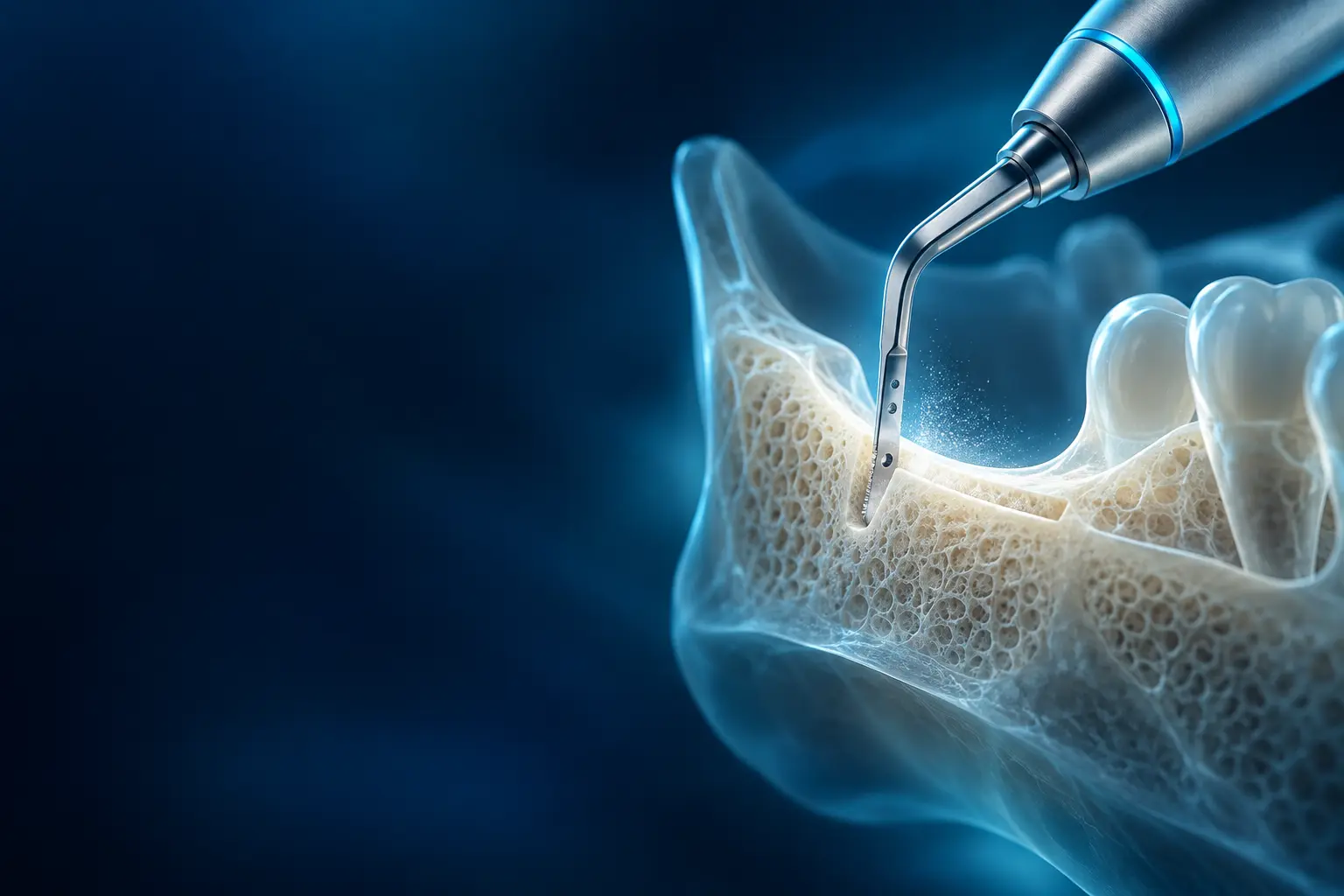
Symbolic medical 3D illustration of a piezosurgical instrument tip at the jawbone

Piezosurgery

Selective ultrasonic bone preparation.

Piezosurgical instruments use fine micro-oscillations. Depending on the procedure, they allow controlled preparation of mineralised tissue and can be a precise complement to conventional instruments, particularly near sensitive anatomical structures.
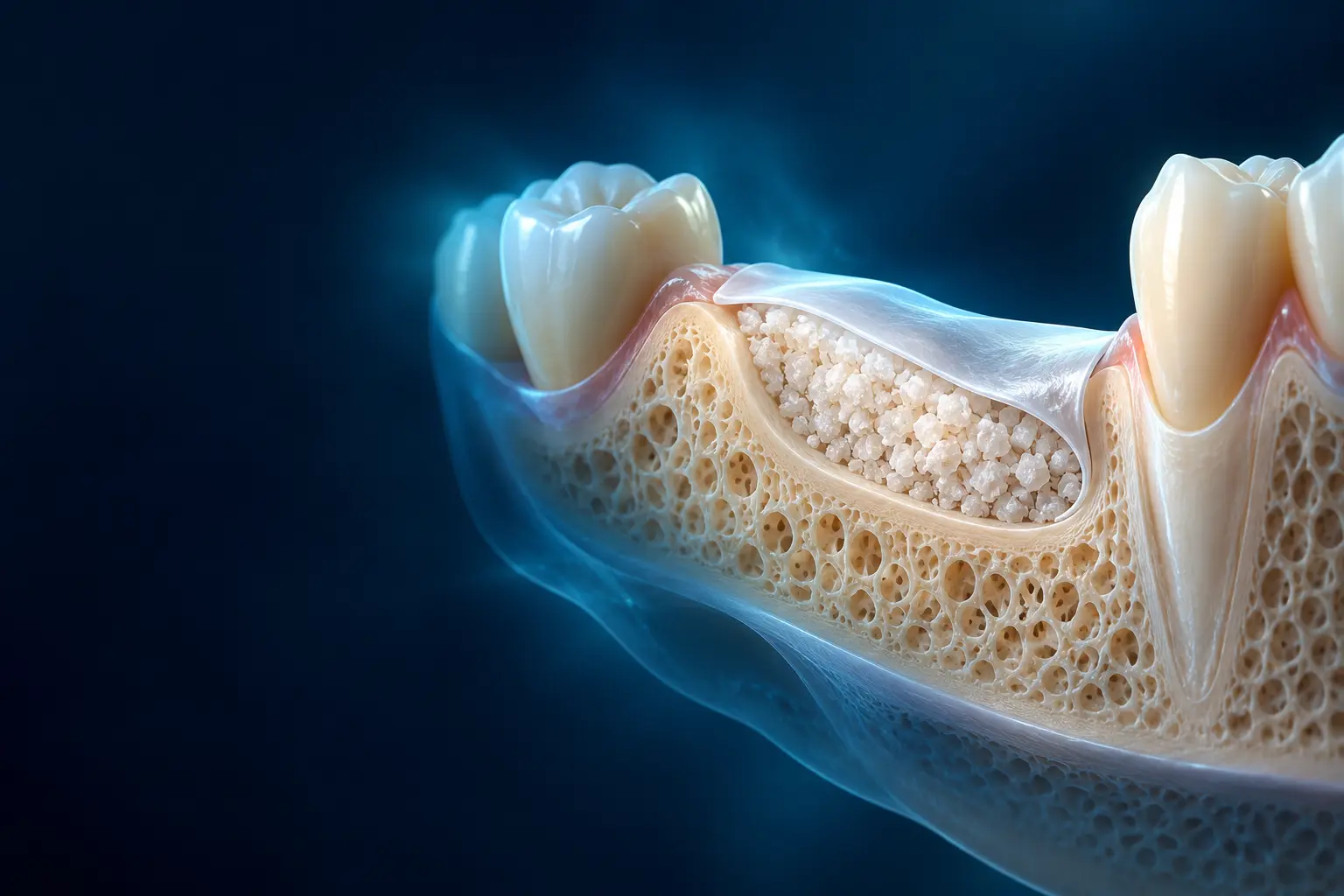
Symbolic medical 3D illustration of bone augmentation beneath a membrane

Bone augmentation

Creating bone volume where it is needed.

If the available bone lacks sufficient width or height, the implant site may be augmented with the patient’s own bone, suitable substitute materials or a combination, depending on the defect. The method and timing are decided individually.

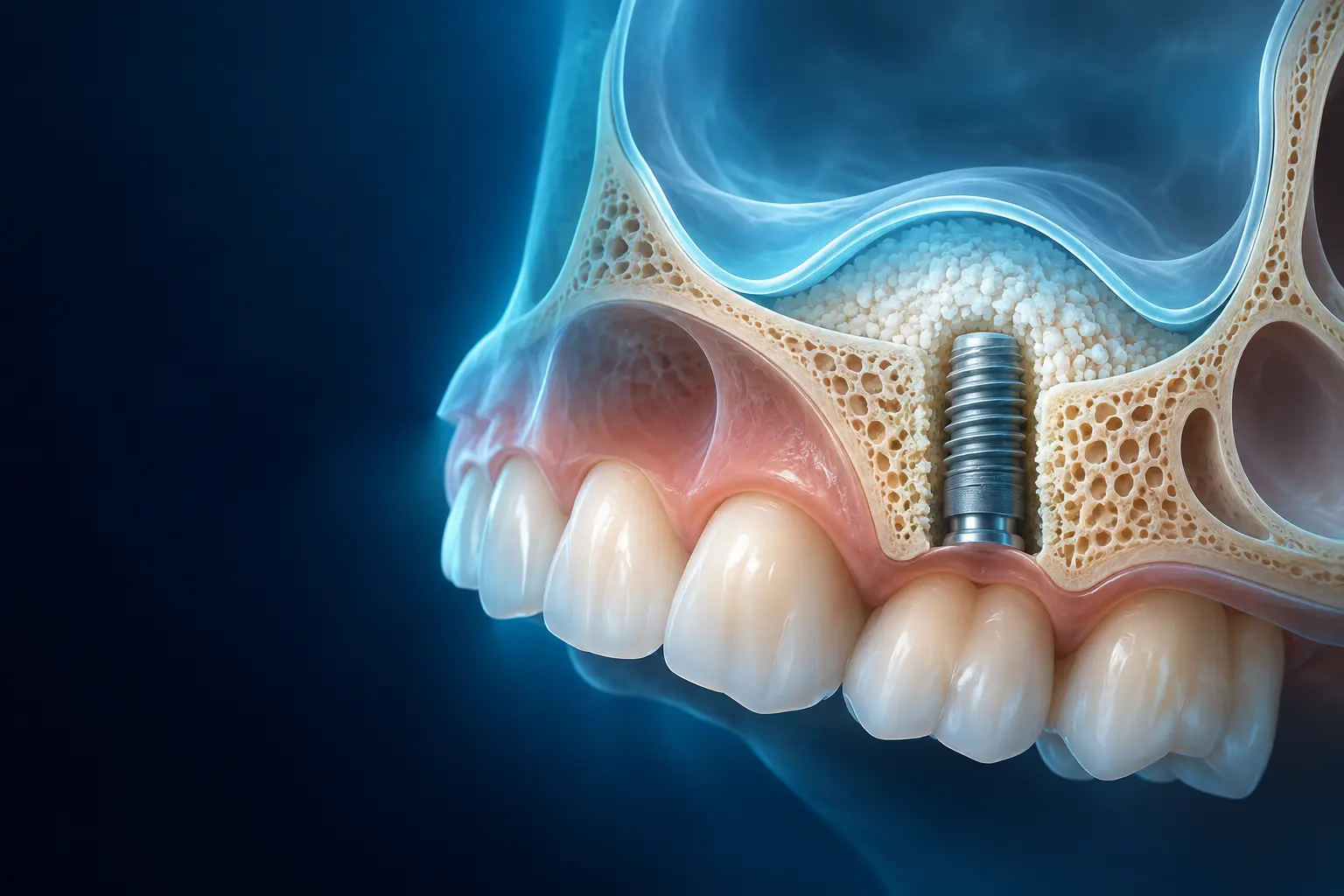
Symbolic medical 3D illustration of a sinus lift in the posterior upper jaw

Sinus lift

Gaining height in the posterior upper jaw in a controlled way.

When bone height in the upper jaw is limited, the floor of the maxillary sinus can be carefully elevated and the resulting space augmented. Whether an internal or lateral approach is appropriate depends on the CBCT findings and residual bone height.

When clinically indicated

Guided implant placement

The virtual plan can be transferred to a custom surgical guide. It helps orient the planned direction and position during surgery. Whether such a guide is medically beneficial is assessed for each case; it does not replace surgical experience or intraoperative control.