Safety on the day of surgery
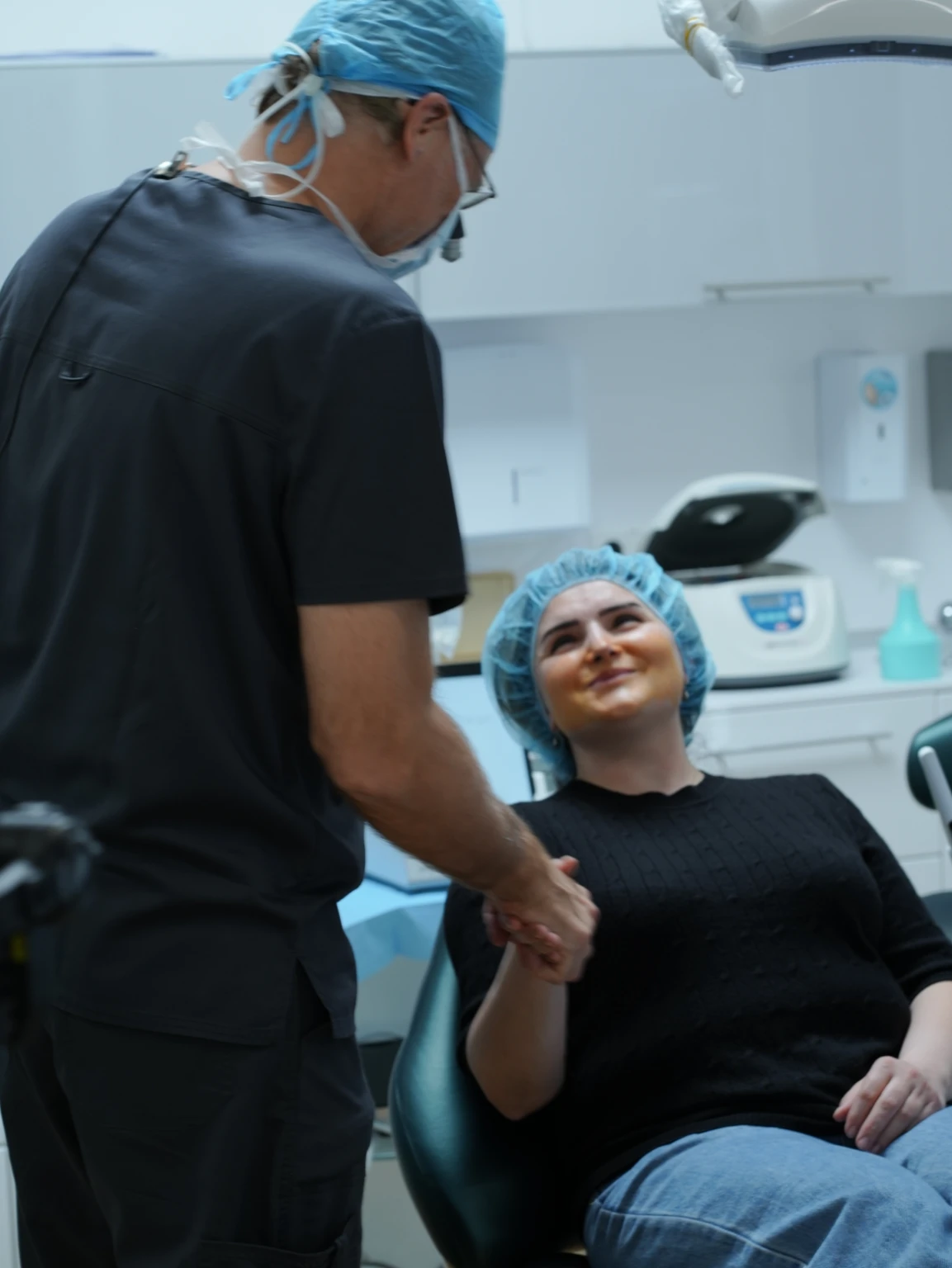
Dedicated surgery days built around implant care.
For more extensive surgical treatments, team, sterile supplies, materials, technology and documentation are prepared specifically. Technical redundancy and clear responsibilities are part of this concept.
- Four-eyes principle in the surgical team
- Structured hygiene and sterilisation workflows
- Surgery and final restoration closely connected
Designed from the ground up
Not retrofitted.
Built for modern dentistry.
ZAK was created across approximately 250 square metres from a completely empty shell. This allowed room routes, sterilisation, imaging, laboratory, climate control, ventilation, air filtration and technical services to be designed as one connected system.
What is a dedicated surgery day?
On these days the treatment area is organised exclusively for surgical procedures. Other patients do not enter the clinical zone. Rooms, assistance, sterile supplies, materials, implant components, technology and aftercare are aligned with the scheduled operations, supporting calm and controlled workflows.
How were hygiene and instrument routes planned?
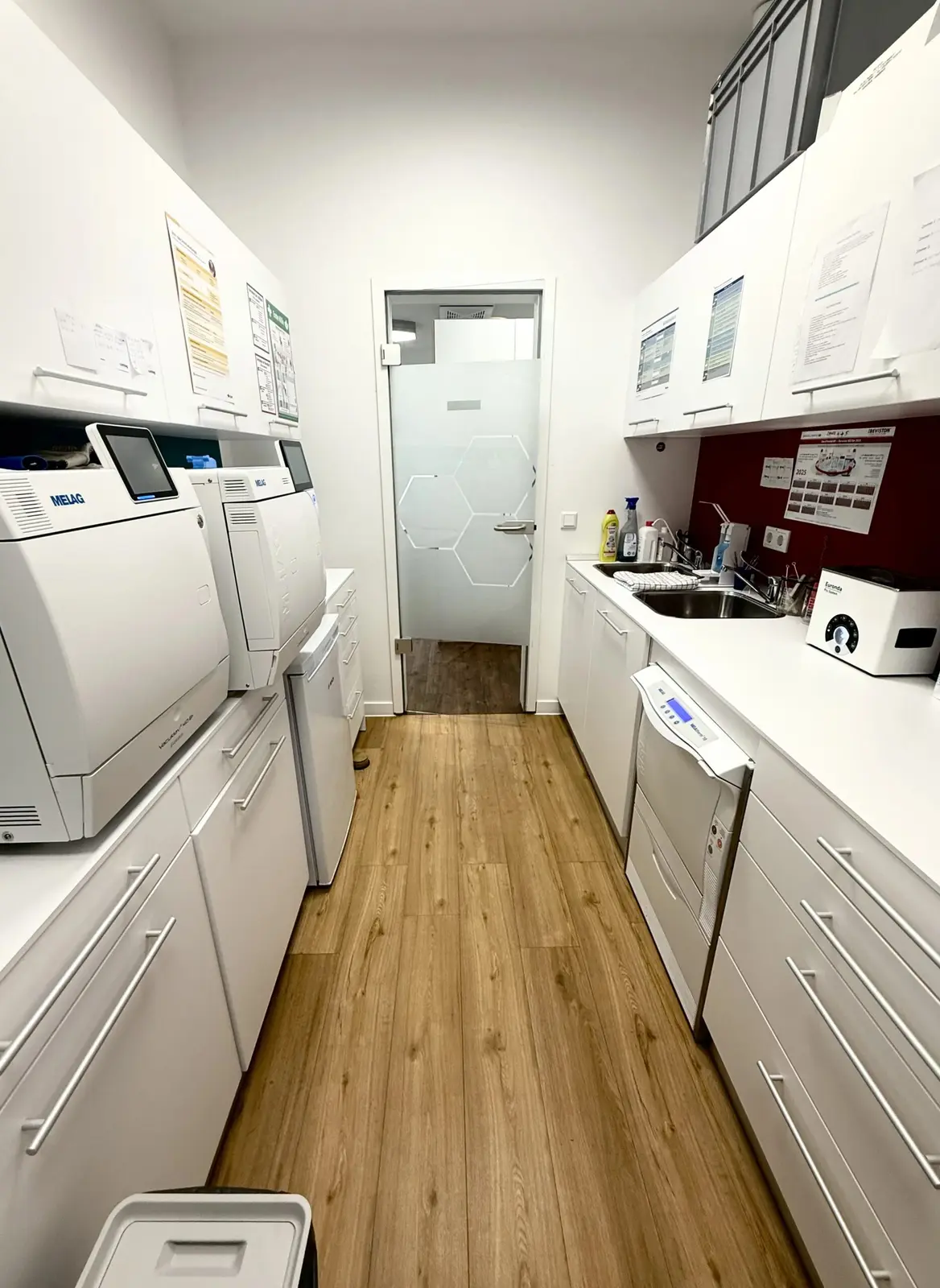
Clean and contaminated zones are separated spatially and organisationally. Used instruments follow a defined route through cleaning, disinfection, maintenance, packaging and sterilisation into protected storage, minimising cross-over between sterile and non-sterile items.
How are processing and sterilisation documented?
Instruments and sets are recorded with barcodes and assigned to the respective treatment. Thermal disinfectors, DAC, sealing units and sterilisers are integrated into digital documentation so releases, maintenance, validation, device tests and water quality remain traceable.
What role do ventilation, filtration and climate control play?
Air conditioning, ventilation, air flow and filtration were incorporated at the shell-planning stage. The technology supports a controlled and comfortable environment in treatment and surgical areas for patients and the clinical team.
What does technical redundancy mean?
Central services such as compressed air, suction and water treatment have redundant systems. Important practice functions therefore do not depend on one component alone; sterilisation and instrument processing are also technically and organisationally protected.
How digital is the practice?
Treatment rooms, imaging, sterilisation, administration and laboratory are connected through a high-performance infrastructure. DVT, digital intraoral radiography, intraoral scanners and cameras supply data for diagnostics, planning, documentation and explanation. The CAD/CAM laboratory then handles design and production in-house.
What does this mean for patient comfort?
Short internal routes, climate-controlled rooms, focused surgery days and personal support reduce organisational interruptions. Care remains clearly structured before, during and after surgery, including recovery, review and aftercare.